SearchJoin Our CommunityCommunity
  • Donate Now
  • Donate

    One in Five: Episode Two with Poonam Shah

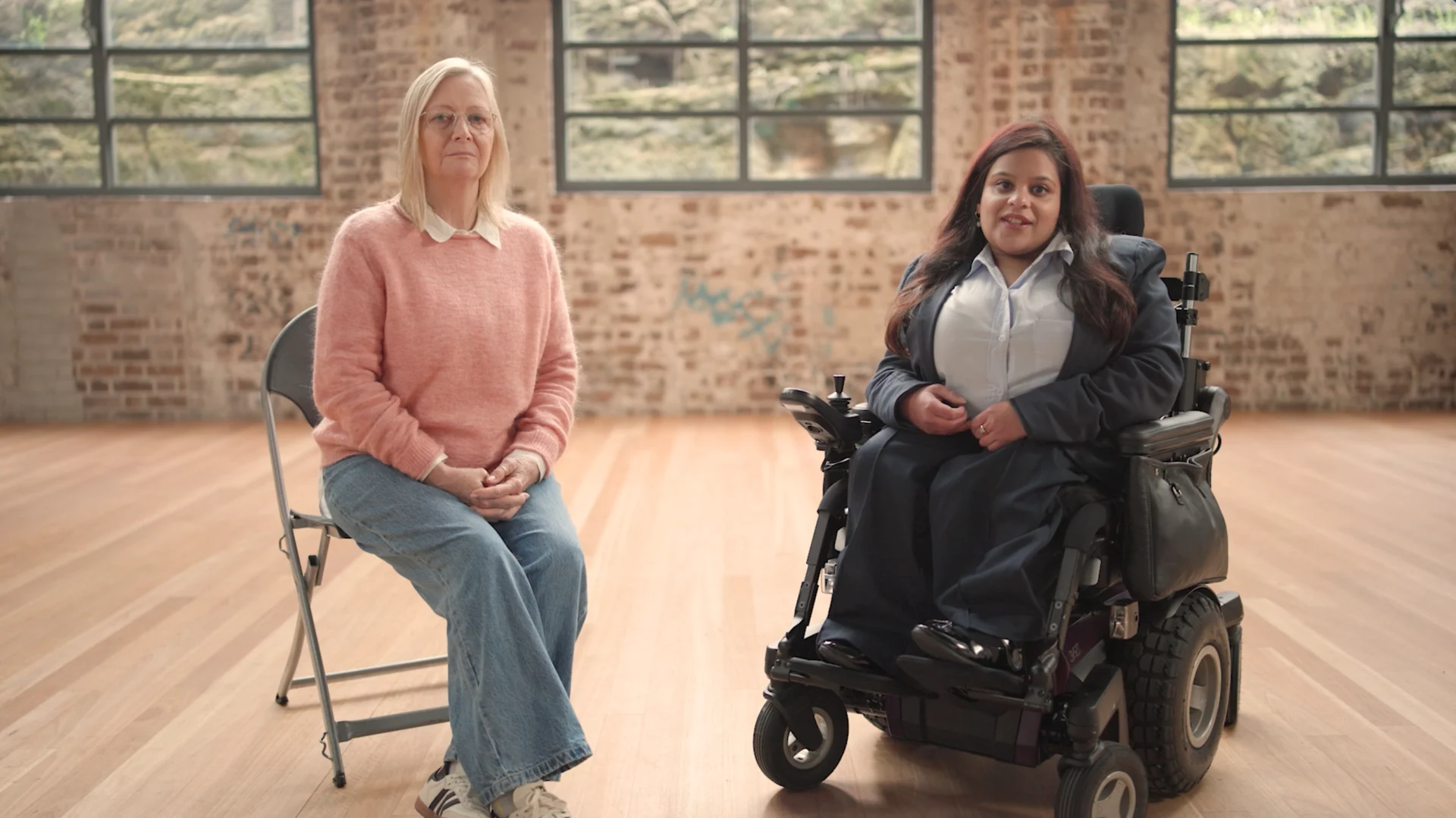
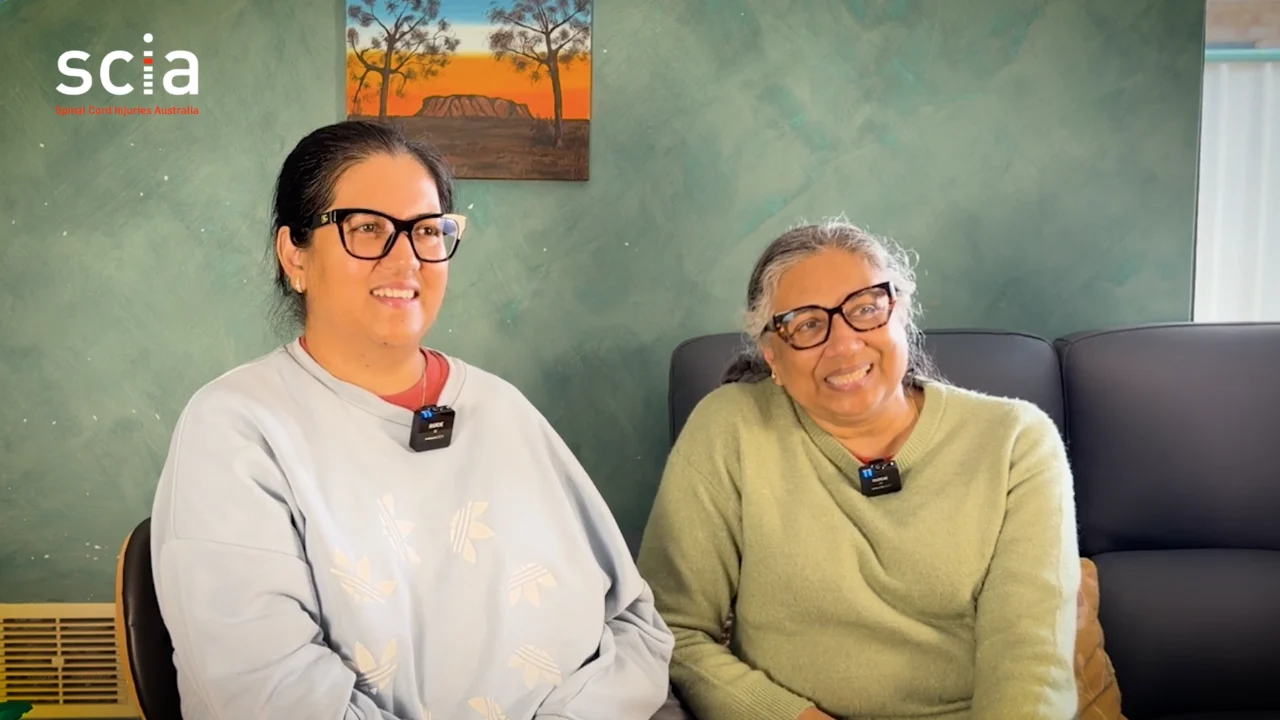
    Poonam Shah seated to the left and her mother Chandrika seated to the right. They are in a home setting with artwork hanging behind them.

    Our latest series ‘One in Five,’ produced in collaboration with Spinal Cord Injuries Australia and NeuroMoves, shines a light on the diverse experiences of the one in five Australians living with disability.

    In this episode, we meet Poonam Shah, who trains at NeuroMoves Joondalup in WA. Poonam shares her experience of living with Neurosarcoidosis, reflecting on her path to diagnosis and the lessons she has learnt along the way. She speaks about the role movement, family and the outdoors has played in her life and her recovery. Joining her is her mother, Chandrika, who shares her perspective as a parent, reflecting on the challenges, growth and moments of hope they have experienced together.

    We would like to thank Poonam and Chandrika for sharing their stories so openly and generously.

    Transcript

    Poonam:
    So I’m paralysed on my left side too. That one operation turned into four brain surgeries.

    Chandrika:
    Her art has turned out to be beautiful. The way she helps me. She, she teaches me also.

    Poonam:
    Hello, jambo, kem chho. My name is Poonam Shah. I live in Perth, Western Australia with mum, dad and my elder sister. I’m Kenyan Australian with Indian heritage. So I’m paralysed on my left side too. And so I’m very special with an invisible and visible disability.

    Things just weren’t working out at work. So I decided to move on and that’s where everything started. Not work related, but my desk was placed in a way where, um, I was right underneath the air conditioning and I suddenly started getting headaches once there were just like hourly headaches and stuff, but then they ended up becoming to like daily headaches, weekly headaches, and added, like with all the aspects of migraines and all that stuff.

    One of my work colleagues had to call my dad to pick me up from work because I was really like everything was going round and round, so I wasn’t even walking straight. So she was holding my hand to work with me. And then we went straight to the GP and he saw it, and straight away I said, this is not a headache, it’s a migraine. I mean, that’s the first time we ever heard of something called a migraine. And then my sister, she got diagnosed with a neurosarcoidosis in 2004. She was only 21 when she got it. And so she told her neurologist what’s happening to me and he took me under his care. Nothing, I just went in, he saw me and then we were doing MRIs every year. But every time we did an MRI, everything was clear, because the disease is such that it comes and goes. And I feel that when I was having the migraines, it was there. But then when I go for an MRI, I’m like the calmest person ever so they were not there. So they didn’t pick it up until 2013. At the end they at 2013, 2014.

    So we were planning this massive family European vacation, and that day I was getting a promotion at work. So we were going to go for lunch, just before lunch I got a call from the neurologist, to say you need to come and see me. Then got told you need to get in for a brain biopsy. So the whole brain was inflamed. That one operation turned into four operations. So four brain surgeries in eight hours. Yeah, one of them, I died. Apparently, for two minutes, I died. So the whole arm, right frontal lobe went all dead, like it went all blue. So they had to remove that, too.

    So this hand, the doctor said it won’t even do this. Assisted. Right? But it can do this. Yeah, but it’s never going to be functional, which I’m okay about. Like I’ve been living without it for 12 years now.

    Chandrika:
    My name is Chandrika Shah. I am 67.

    It was scary, but due to my elder daughter going through the same things, neurosarcoidosis and in her situation she became epileptic. So from that onwards, all her history started with having blood clots, having water retention and then pressure. So from that point of view, I have been very scared for Poonam as well because that stroke has obstructed her left side. So once she comes out from the theatre room, don’t be shocked. And to be positive for both the daughters and my husband, no tears at all and I’ll keep on doing what I can do.

    Poonam:
    With NeuroMoves what I loved the most was on my first day there, they all pronounced my name ‘Poo-nam’ and that’s what I really like, because knowing someone and pronouncing someone’s name is very respectful.

    When I started NeuroMoves, I actually didn’t know what I was going to be putting myself into because my neurophysio referred me to them after I got into the NDIS and all that. And the staff, they’re all young and they do things by the book, but also they do it per the person, so they treat you like a human, not a number.

    In the first few years after I came back home, I was going everywhere in my wheelchair. So mum and dad or my sister would push me in the chair. And if you go to the shops to buy something for me, they look at my mum or dad and talk to them rather than talking to me, who is literally just seated there. It’s not easy for people with disabilities.

    But I’ve recently joined canoeing and we’ve been paddling with this hand and I’m seeing it like doing something. It does this movement I’m showing on the right but that’s what it does on the left. And I’m like, that feels really cool and I want to work on it. It’s so fun. Just being out there in the water, everything that you’re going through with life on land, once you’re on the water, it disappears. There’s something about water in the ripples. There’s a sound, there’s peace.

    Chandrika:
    My proudest moment is a Poonam is walking. She’s able to use her right hand to do many things. Her art has turned out to be beautiful and we are friends. The way she helps me, she teaches me also. I’m learning from her a lot.

    And this is my proud moment. Another one that we are all together. Now I’ve started mentioning that Poonam is fine she’s driving to her exercise and to get work, or to do a little bit of shopping and makes me feel above, like my feet are high above.

    Poonam:
    It’s good. It’s a good feel.

    Chandrika:
    It is. The feeling is great. I must say. It does. Though the tears come out at that time, they are happy tears.

    Want to learn more about NeuroMoves?

    NeuroMoves is a specialised exercise physiology and physiotherapy service for people with disability and neurological conditions. Find out more about how they can help you, or a loved one, by visiting the NeuroMoves website.

    Poonam Shah seated to the left and her mother Chandrika seated to the right. They are in a home setting with artwork hanging behind them.

    Our latest series ‘One in Five,’ produced in collaboration with Spinal Cord Injuries Australia and NeuroMoves, shines a light on the diverse experiences of the one in five Australians living with disability.

    In this episode, we meet Poonam Shah, who trains at NeuroMoves Joondalup in WA. Poonam shares her experience of living with Neurosarcoidosis, reflecting on her path to diagnosis and the lessons she has learnt along the way. She speaks about the role movement, family and the outdoors has played in her life and her recovery. Joining her is her mother, Chandrika, who shares her perspective as a parent, reflecting on the challenges, growth and moments of hope they have experienced together.

    We would like to thank Poonam and Chandrika for sharing their stories so openly and generously.

    Transcript

    Poonam:
    So I’m paralysed on my left side too. That one operation turned into four brain surgeries.

    Chandrika:
    Her art has turned out to be beautiful. The way she helps me. She, she teaches me also.

    Poonam:
    Hello, jambo, kem chho. My name is Poonam Shah. I live in Perth, Western Australia with mum, dad and my elder sister. I’m Kenyan Australian with Indian heritage. So I’m paralysed on my left side too. And so I’m very special with an invisible and visible disability.

    Things just weren’t working out at work. So I decided to move on and that’s where everything started. Not work related, but my desk was placed in a way where, um, I was right underneath the air conditioning and I suddenly started getting headaches once there were just like hourly headaches and stuff, but then they ended up becoming to like daily headaches, weekly headaches, and added, like with all the aspects of migraines and all that stuff.

    One of my work colleagues had to call my dad to pick me up from work because I was really like everything was going round and round, so I wasn’t even walking straight. So she was holding my hand to work with me. And then we went straight to the GP and he saw it, and straight away I said, this is not a headache, it’s a migraine. I mean, that’s the first time we ever heard of something called a migraine. And then my sister, she got diagnosed with a neurosarcoidosis in 2004. She was only 21 when she got it. And so she told her neurologist what’s happening to me and he took me under his care. Nothing, I just went in, he saw me and then we were doing MRIs every year. But every time we did an MRI, everything was clear, because the disease is such that it comes and goes. And I feel that when I was having the migraines, it was there. But then when I go for an MRI, I’m like the calmest person ever so they were not there. So they didn’t pick it up until 2013. At the end they at 2013, 2014.

    So we were planning this massive family European vacation, and that day I was getting a promotion at work. So we were going to go for lunch, just before lunch I got a call from the neurologist, to say you need to come and see me. Then got told you need to get in for a brain biopsy. So the whole brain was inflamed. That one operation turned into four operations. So four brain surgeries in eight hours. Yeah, one of them, I died. Apparently, for two minutes, I died. So the whole arm, right frontal lobe went all dead, like it went all blue. So they had to remove that, too.

    So this hand, the doctor said it won’t even do this. Assisted. Right? But it can do this. Yeah, but it’s never going to be functional, which I’m okay about. Like I’ve been living without it for 12 years now.

    Chandrika:
    My name is Chandrika Shah. I am 67.

    It was scary, but due to my elder daughter going through the same things, neurosarcoidosis and in her situation she became epileptic. So from that onwards, all her history started with having blood clots, having water retention and then pressure. So from that point of view, I have been very scared for Poonam as well because that stroke has obstructed her left side. So once she comes out from the theatre room, don’t be shocked. And to be positive for both the daughters and my husband, no tears at all and I’ll keep on doing what I can do.

    Poonam:
    With NeuroMoves what I loved the most was on my first day there, they all pronounced my name ‘Poo-nam’ and that’s what I really like, because knowing someone and pronouncing someone’s name is very respectful.

    When I started NeuroMoves, I actually didn’t know what I was going to be putting myself into because my neurophysio referred me to them after I got into the NDIS and all that. And the staff, they’re all young and they do things by the book, but also they do it per the person, so they treat you like a human, not a number.

    In the first few years after I came back home, I was going everywhere in my wheelchair. So mum and dad or my sister would push me in the chair. And if you go to the shops to buy something for me, they look at my mum or dad and talk to them rather than talking to me, who is literally just seated there. It’s not easy for people with disabilities.

    But I’ve recently joined canoeing and we’ve been paddling with this hand and I’m seeing it like doing something. It does this movement I’m showing on the right but that’s what it does on the left. And I’m like, that feels really cool and I want to work on it. It’s so fun. Just being out there in the water, everything that you’re going through with life on land, once you’re on the water, it disappears. There’s something about water in the ripples. There’s a sound, there’s peace.

    Chandrika:
    My proudest moment is a Poonam is walking. She’s able to use her right hand to do many things. Her art has turned out to be beautiful and we are friends. The way she helps me, she teaches me also. I’m learning from her a lot.

    And this is my proud moment. Another one that we are all together. Now I’ve started mentioning that Poonam is fine she’s driving to her exercise and to get work, or to do a little bit of shopping and makes me feel above, like my feet are high above.

    Poonam:
    It’s good. It’s a good feel.

    Chandrika:
    It is. The feeling is great. I must say. It does. Though the tears come out at that time, they are happy tears.

    Want to learn more about NeuroMoves?

    NeuroMoves is a specialised exercise physiology and physiotherapy service for people with disability and neurological conditions. Find out more about how they can help you, or a loved one, by visiting the NeuroMoves website.

    Search SCIA: