Opens in a new tab
SearchEventsJoin Our CommunityCommunity
  • Donate Now
  • Donate

    One in Five: Episode Six with Anne Currie

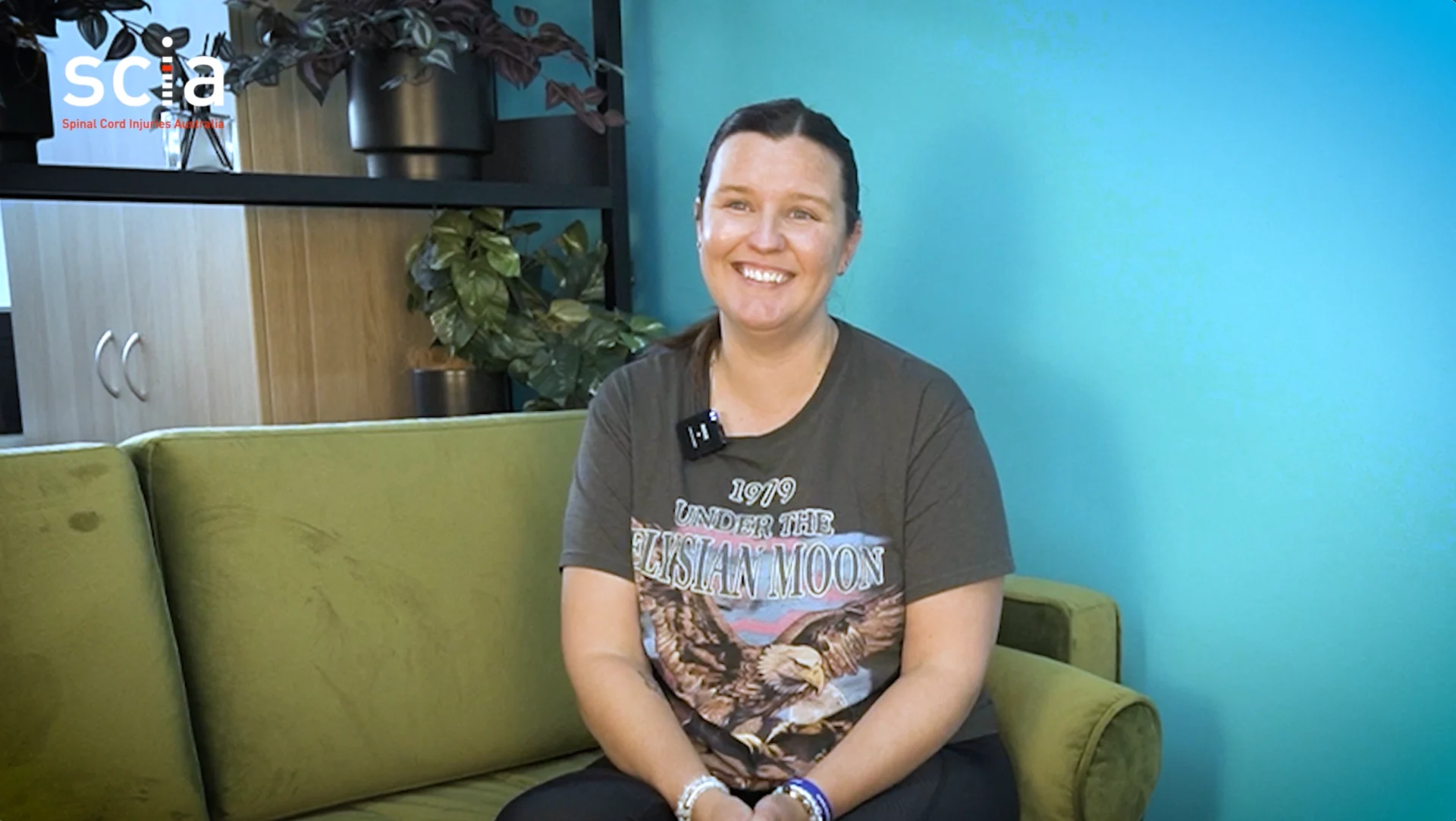
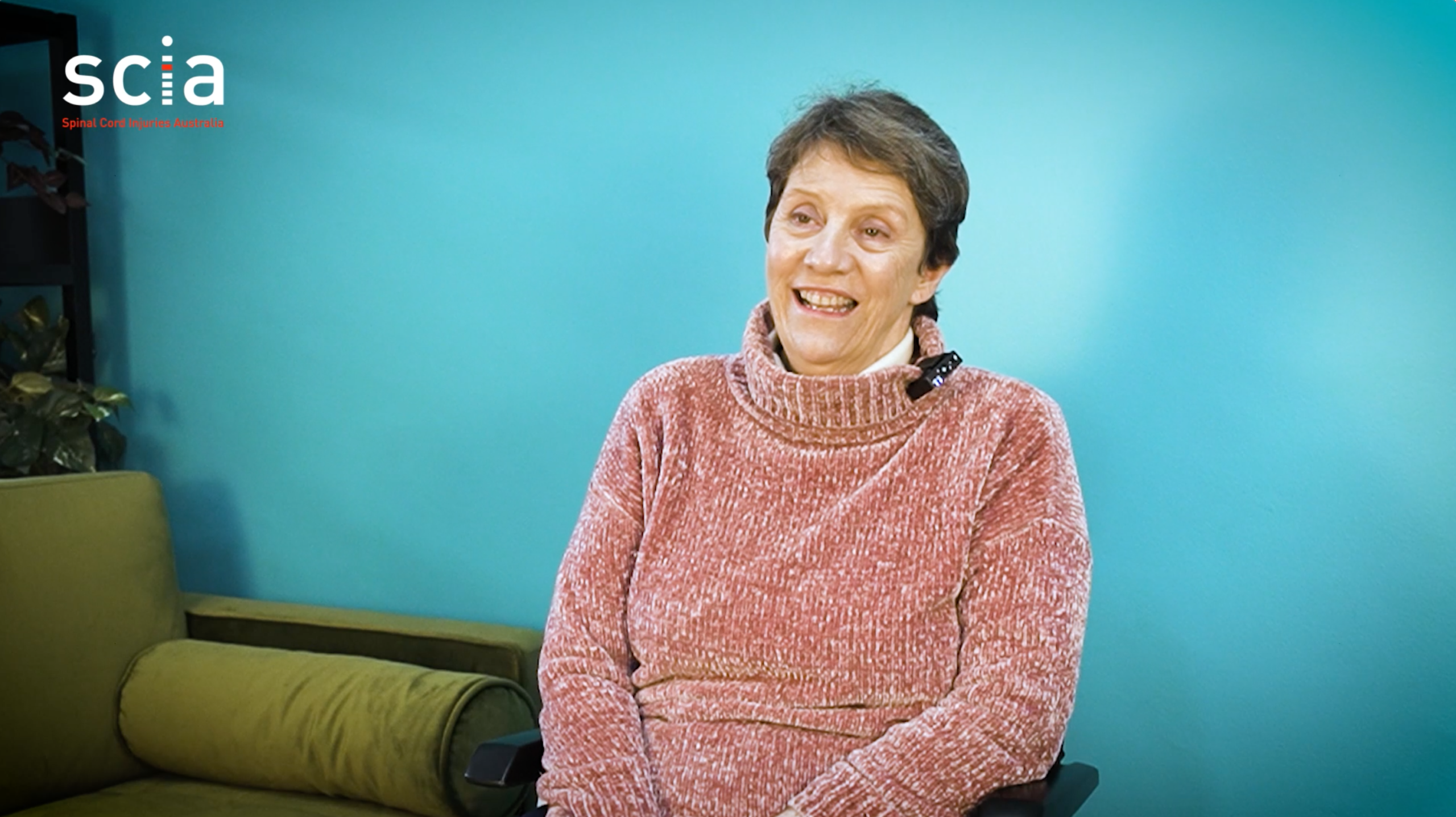
    Anne is smiling and seated next to a green lounge against a teal wall.

    For Anne, movement has always been a big part of life. A keen cyclist and mother of three, she sustained a C6-C7 incomplete spinal cord injury (SCI) while training for a half ironman triathlon. After leaving rehabilitation, Anne was determined to find ways to stay active and discovered the Walk On program, an intensive activity-based therapy program that would later become NeuroMoves.

    In this episode of One in Five, produced in collaboration with Spinal Cord Injuries Australia (SCIA) and NeuroMoves, Anne reflects on her journey, the support of her family and friends, and how movement and exercise has helped her maintain her independence, confidence and quality of life.

    Thank you to Anne for sharing her story so openly.

    Transcript

    I think I’m lucky that I’m in a reasonably healthy condition right now…so I think that’s what I’m looking forward to. I mean, every other part of my life is being made possible by what I do here and I will not stop doing this until I can’t ever get out of bed,

    Hello, my name is Anne Currie and I currently attend the NeuroMoves in Freo (Fremantle) and I work for SCIA in the Peer and Family Support.

    Twenty years ago, I was training for the half ironman triathlon down in Busselton and I had an accident on my bike on the roads as I was training and I suffered a C6, C7 incomplete spinal cord injury…so the C6 and C7 vertebrae in the neck. So I’ve been affected from the chest down.

    I think I wasn’t really fully aware of what had actually occurred and what the outcome was going to be long term. So much was kind of happening in the initial few first days and weeks of that accident that a lot of things were going through my mind. I was a mother of three young children at home with a very busy husband, so I think part of it was also I can’t do any of those tasks anymore and I need to rely on other people to help me with that. I was still going to be in hospital for at least six months for rehabilitation, so that was a long way down the track. But I guess it was hard to initially, especially with all the personal things that go on with that regarding personal care that I could no longer do myself. So that was a little bit hard to get my head around. I think there is a lot more support now in the hospital system for that kind of emotional and I guess physical dependence as well.

    Before I was one of those Mums just took everybody around wherever they wanted to go, do all their sports, wherever they wanted to do, sleepovers at people’s houses. I was a taxi driver, cooking, cleaning, I did it all. So I think I realised I was going to need help with that, which I did get. I was lucky I could get full-time carers, so I had people coming during the week. From 8am in the morning till 5pm in the afternoon. So they took over helping me, getting kids ready for school. And the good thing was I think they were all young teenagers. They learnt very early on how to look after themselves, which was really lovely. They were amazing. I was so lucky that… I’ve got two daughters and a son and my 2 oldest daughters basically took upon themselves to say, how can we help mum do what she needs to get done? They were just amazed. My kids were just onto it. I was so lucky that they don’t really see it as an issue anymore.

    We are fully onto if we’re going to go anywhere, we’ve got it all sorted as far as accessibility. One of my daughters is really into finding different ways of being able to help me in many ways with equipment and so forth. They’re just really, I mean they’re all grown up now and adults, but they were just amazing.

    I was lucky in the fact that I had that experience of wanting to be physically active when I had my accident because I thought I don’t want this to stop. I want to find out many ways of being able to do physical activity after, how to swim, possibly how to ride a bike, do all that kind of stuff. So I came, I think coming from that background was really good for me as well. I was really lucky that when I was, because I was into cycling a lot, that my group of friends that I was with at the time when I was cycling continued to be my group of friends from all these years. They never stopped. You often hear the stories of you find out who your friends really are when something dramatic like this happens to you, but they stuck by me, which was really great. So that continued on for me.

    Nothing else much really changed, I think. I still, I mean, we like to go to the movies a lot, so I never stopped going to the theatres. We still continued to travel when we needed to, going overseas and things.

    So when I left Shenton Park after the six months and I said, are there any physical therapy programs out in the community? The answer was basically no back then, and to just go and have a good life. And I said, no, I’m not going to do that. So of course, like most people, I got online and I looked around and I found the Walk On program in California. And I went on to some of those videos. which looked amazing because people were getting up and walking from those videos. And I went, that’s crazy. So I thought, how do I get in touch with these people I’d like to do? Not that I wanted to walk again, but I just wanted to get to do a physiotherapy program. And then on the, I think on the site, there was this little box in the corner saying, coming to Australia. And I went, what? So I contacted Sydney and I had an interview up there at the university where they’d just started the program and they said, guess what, we’re bringing it to Perth in a little while and I said, great, sign me up. So I did. And that’s how it happened.

    I didn’t have any major goals, I guess, thinking, oh yeah, I’m going to get up and walk, or, I did have some function still, but I wasn’t really sure of what I was going to expect. So I basically went in there with an open mind, thinking, we’ll see what they can provide, and been here ever since, especially with My transfers, that’s been a big deal for me to be able to be independent in that respect, that I’m not relying on someone or a sling to get me across from somewhere to another. So my independence in that is really important. I think if you’ve got other people in your group who are doing this for you, they can only do so much. But coming from yourself, exactly how you feel, what your body needs. Don’t rely on everybody else to be able to tell you what you think you should be doing. It’s more about travelling. It’s me being able to go to visit my kids, I think, and also continue to do trips overseas. I think I’m lucky that I’m in a reasonably healthy condition right now, so in my later stages of life. So I think that’s what I’m looking forward to. I mean every other part of my life is being made possible by what I do here and I will not stop doing this until I can’t ever get out of bed. Because I just think NeuroMoves is just amazing. I’m grateful for the fact that they’ve come here to Perth and that there is a NeuroMoves program still running.

    Want to learn more about NeuroMoves?

    NeuroMoves is a specialised exercise physiology and physiotherapy service for people with disability and neurological conditions. Find out more about how they can help you, or a loved one, by visiting the NeuroMoves website.
    Anne is smiling and seated next to a green lounge against a teal wall.

    For Anne, movement has always been a big part of life. A keen cyclist and mother of three, she sustained a C6-C7 incomplete spinal cord injury (SCI) while training for a half ironman triathlon. After leaving rehabilitation, Anne was determined to find ways to stay active and discovered the Walk On program, an intensive activity-based therapy program that would later become NeuroMoves.

    In this episode of One in Five, produced in collaboration with Spinal Cord Injuries Australia (SCIA) and NeuroMoves, Anne reflects on her journey, the support of her family and friends, and how movement and exercise has helped her maintain her independence, confidence and quality of life.

    Thank you to Anne for sharing her story so openly.

    Transcript

    I think I’m lucky that I’m in a reasonably healthy condition right now…so I think that’s what I’m looking forward to. I mean, every other part of my life is being made possible by what I do here and I will not stop doing this until I can’t ever get out of bed,

    Hello, my name is Anne Currie and I currently attend the NeuroMoves in Freo (Fremantle) and I work for SCIA in the Peer and Family Support.

    Twenty years ago, I was training for the half ironman triathlon down in Busselton and I had an accident on my bike on the roads as I was training and I suffered a C6, C7 incomplete spinal cord injury…so the C6 and C7 vertebrae in the neck. So I’ve been affected from the chest down.

    I think I wasn’t really fully aware of what had actually occurred and what the outcome was going to be long term. So much was kind of happening in the initial few first days and weeks of that accident that a lot of things were going through my mind. I was a mother of three young children at home with a very busy husband, so I think part of it was also I can’t do any of those tasks anymore and I need to rely on other people to help me with that. I was still going to be in hospital for at least six months for rehabilitation, so that was a long way down the track. But I guess it was hard to initially, especially with all the personal things that go on with that regarding personal care that I could no longer do myself. So that was a little bit hard to get my head around. I think there is a lot more support now in the hospital system for that kind of emotional and I guess physical dependence as well.

    Before I was one of those Mums just took everybody around wherever they wanted to go, do all their sports, wherever they wanted to do, sleepovers at people’s houses. I was a taxi driver, cooking, cleaning, I did it all. So I think I realised I was going to need help with that, which I did get. I was lucky I could get full-time carers, so I had people coming during the week. From 8am in the morning till 5pm in the afternoon. So they took over helping me, getting kids ready for school. And the good thing was I think they were all young teenagers. They learnt very early on how to look after themselves, which was really lovely. They were amazing. I was so lucky that… I’ve got two daughters and a son and my 2 oldest daughters basically took upon themselves to say, how can we help mum do what she needs to get done? They were just amazed. My kids were just onto it. I was so lucky that they don’t really see it as an issue anymore.

    We are fully onto if we’re going to go anywhere, we’ve got it all sorted as far as accessibility. One of my daughters is really into finding different ways of being able to help me in many ways with equipment and so forth. They’re just really, I mean they’re all grown up now and adults, but they were just amazing.

    I was lucky in the fact that I had that experience of wanting to be physically active when I had my accident because I thought I don’t want this to stop. I want to find out many ways of being able to do physical activity after, how to swim, possibly how to ride a bike, do all that kind of stuff. So I came, I think coming from that background was really good for me as well. I was really lucky that when I was, because I was into cycling a lot, that my group of friends that I was with at the time when I was cycling continued to be my group of friends from all these years. They never stopped. You often hear the stories of you find out who your friends really are when something dramatic like this happens to you, but they stuck by me, which was really great. So that continued on for me.

    Nothing else much really changed, I think. I still, I mean, we like to go to the movies a lot, so I never stopped going to the theatres. We still continued to travel when we needed to, going overseas and things.

    So when I left Shenton Park after the six months and I said, are there any physical therapy programs out in the community? The answer was basically no back then, and to just go and have a good life. And I said, no, I’m not going to do that. So of course, like most people, I got online and I looked around and I found the Walk On program in California. And I went on to some of those videos. which looked amazing because people were getting up and walking from those videos. And I went, that’s crazy. So I thought, how do I get in touch with these people I’d like to do? Not that I wanted to walk again, but I just wanted to get to do a physiotherapy program. And then on the, I think on the site, there was this little box in the corner saying, coming to Australia. And I went, what? So I contacted Sydney and I had an interview up there at the university where they’d just started the program and they said, guess what, we’re bringing it to Perth in a little while and I said, great, sign me up. So I did. And that’s how it happened.

    I didn’t have any major goals, I guess, thinking, oh yeah, I’m going to get up and walk, or, I did have some function still, but I wasn’t really sure of what I was going to expect. So I basically went in there with an open mind, thinking, we’ll see what they can provide, and been here ever since, especially with My transfers, that’s been a big deal for me to be able to be independent in that respect, that I’m not relying on someone or a sling to get me across from somewhere to another. So my independence in that is really important. I think if you’ve got other people in your group who are doing this for you, they can only do so much. But coming from yourself, exactly how you feel, what your body needs. Don’t rely on everybody else to be able to tell you what you think you should be doing. It’s more about travelling. It’s me being able to go to visit my kids, I think, and also continue to do trips overseas. I think I’m lucky that I’m in a reasonably healthy condition right now, so in my later stages of life. So I think that’s what I’m looking forward to. I mean every other part of my life is being made possible by what I do here and I will not stop doing this until I can’t ever get out of bed. Because I just think NeuroMoves is just amazing. I’m grateful for the fact that they’ve come here to Perth and that there is a NeuroMoves program still running.

    Want to learn more about NeuroMoves?

    NeuroMoves is a specialised exercise physiology and physiotherapy service for people with disability and neurological conditions. Find out more about how they can help you, or a loved one, by visiting the NeuroMoves website.
    Search SCIA: