SearchJoin Our CommunityCommunity
  • Donate Now
  • Donate

    How Tailored Exercise Helped Turn a Dream to Snorkel in Fiji into a Reality

    For Luke, a 27‑year‑old NeuroMoves client with Friedrich Ataxia, what began as a journey to rebuild strength after a near fatal hospitalisation soon grew into something far bigger.

    For Kat Yee, his Exercise Physiologist, it became a powerful reminder of how the right supports can shape not just a goal but an entire experience for a person with disability.

    Together with the help of Luke’s wider support network, they turned a dream to snorkel in Fiji into reality through personalised preparation, creativity, and unwavering trust.


    Friedreich Ataxia is a progressive genetic condition that slowly affects the nervous system because the body doesn’t make enough of a protein needed for healthy cell energy. Symptoms usually start earlier in life and can include trouble with balance, walking, and coordination. As time goes on, it may also affect speech, hearing, and sometimes the heart.

    By the time Luke began working with Kat at NeuroMoves Lismore in 2021 at age 23, he was already in a wheelchair.

    In 2022 he was hospitalised and after he was discharged, his primary goal was to rebuild the strength, mobility, and transfer ability he had before his hospital stay.

    At the same time, Luke was also experiencing irregular heart rhythm. Over time this worsened, which led to Luke having a pacemaker fitted just after his 25th birthday.  

    After everything he has been through, Luke decided it was time for a break. He has fond childhood memories of snorkelling in Fiji and wanted to take a trip back.

    Once Fiji was decided, Kat and Luke had long discussions with his family about how realistic this trip would be; how would Luke manage in the water? What supports would he need? Does he have any fears and apprehensions?

    The biggest concern, of course, was ensuring Luke felt safe enough in the water to stay calm and enjoy the experience.

    Kat decided to introduce hydrotherapy sessions to Luke’s plan and shift the focus in the clinic to work on mobility.

    Hydrotherapy uses the water’s buoyancy to helps increase range of function, and the water’s resistance to improve muscular strength, postural control, core strength and balance.

    In clinic sessions involved doing exercises on a padded table (also known as a plinth) so that Luke could use the surface to gauge how he should be positioned in the water. 

    Years of wheelchair use meant that Luke’s natural resting position was more flexed at the hips, with a forward head and shoulder position. This is almost the opposite of the extended position needed for snorkelling. Without correction, hips, knees and legs would likely be dragging on the ground, and any current could spin him around to be on his back (or worse).  

    Together, these exercises helped build Luke’s confidence in the water and troubleshoot any problems that might arise before the trip.

    Another priority was ensuring the safety of Luke in the water, along with the safety of the support person with him, who Luke would be entirely reliant on.

    To do this, Kat and Luke developed a nonverbal communication system using hand squeezes so Luke could signal his needs while his face was submerged.

    They also created a panic protocol, practicing holding his breath and being in the water with his mask off in different positions to reduce fear if something went wrong.

    Kat also helped Luke gain confidence in rotating his core, floating independently and safe propulsion techniques, to manage turbulent water and avoid hitting the reef.

    The plan was to eventually bring in Luke’s in-water support person to practice together, but life had other ideas. His support person could no longer attend the trip. So, Luke invited Kat.

    To experience a massive goal and life bucket list check mark being accomplished with your teammate made it all the sweeter for both of us”.

    Kat, a seasoned backpacker herself, turned out to be the perfect travel companion:

    Things that would normally be really annoying or uncomfortable like steep ramps and unpaved pathways ended up becoming something that we constantly laughed about instead of being a source of physical and social discomfort for him. I think what we really didn’t anticipate was how helpful it would be to have his EP there, because it made all of those little things much easier to have someone who knew Luke’s capacity to help navigate and advocate for him in those situations.

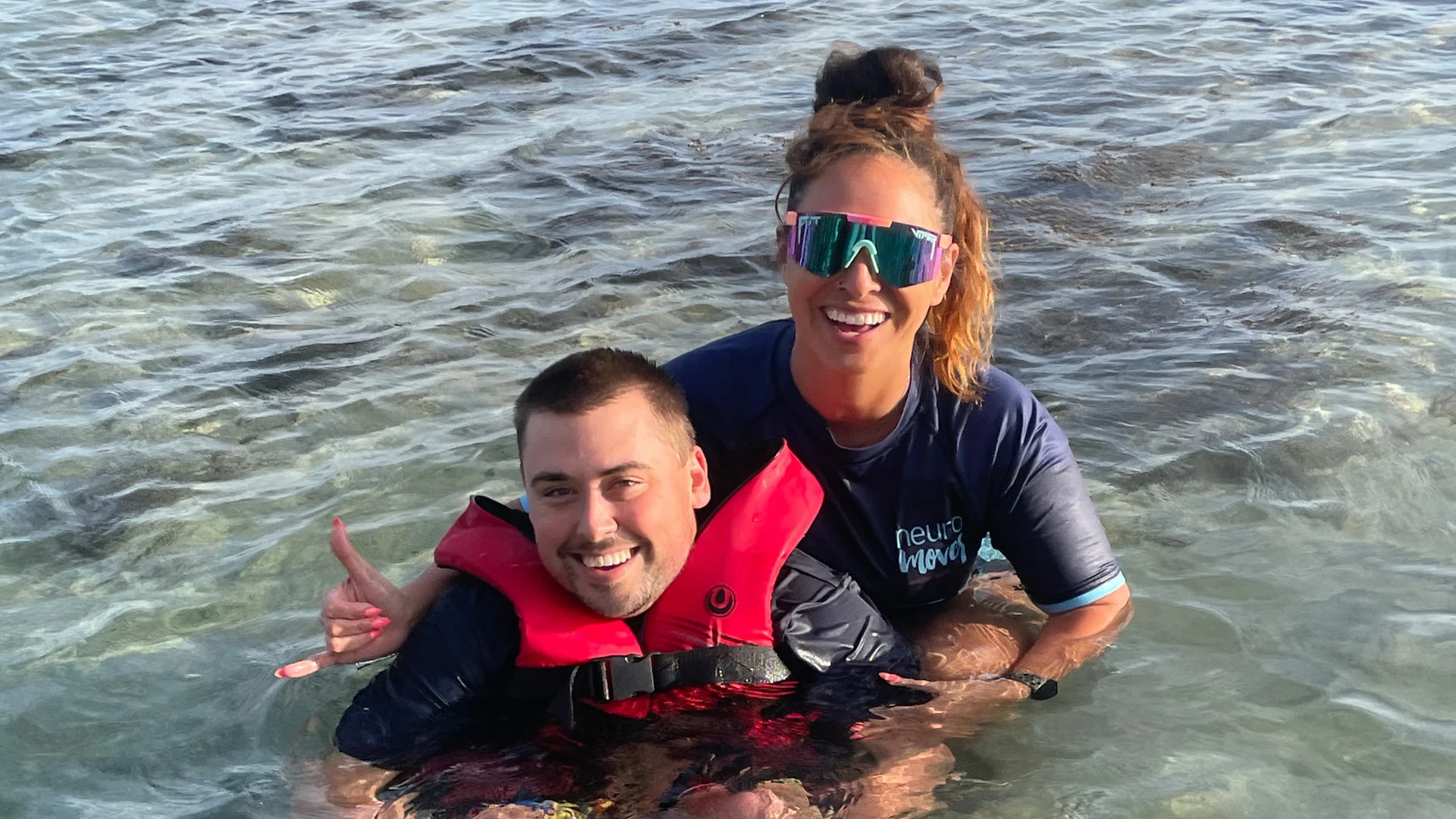
    In the end, the trip was everything Luke had hoped for; he successfully managed to snorkel with confidence, stayed calm in the water (besides a quick encounter with some sea urchins that caught him off guard), and ultimately achieved the goal him and Kat had worked so hard to reach.

    Since their trip, Luke still meets with Kat at NeuroMoves Lismore for his regular sessions. They’ve kept up with Hydrotherapy, and they don’t plan on stopping anytime soon!

    Because Luke’s cervical and hip extension has also improved so much over the last year due to all the trip preparation work, they’ve progressed to harnessed standing with assisted walking during their clinic sessions.

    For Kat, the trip was deeply meaningful, and their already strong working relationship grew deeper:

    Honestly, the whole experience was so deeply impactful for me, on a personal and professional level. After all the work that we put in to get him there, confidently, and all the problem-solving on the go, as soon as I started walking him over the reef, I just felt this profound sense of accomplishment for both of us. Before this whole adventure started, I felt that Luke and I had a strong working relationship based on trust, communication, and shared goals.  I try to encompass this with all my clients because that’s what really makes their therapy for them beneficial for both of us, and as it turns out, also makes for incredible friendships

    Luke & Kat joined Susan Wood on our Have The Nerve podcast to share more about their trip to Fiji. Listen now:

    NeuroMoves is a specialised exercise service for people with disability and neurological conditions. Find out more about how they can help you, or a loved one, here.
    For Luke, a 27‑year‑old NeuroMoves client with Friedrich Ataxia, what began as a journey to rebuild strength after a near fatal hospitalisation soon grew into something far bigger.

    For Kat Yee, his Exercise Physiologist, it became a powerful reminder of how the right supports can shape not just a goal but an entire experience for a person with disability.

    Together with the help of Luke’s wider support network, they turned a dream to snorkel in Fiji into reality through personalised preparation, creativity, and unwavering trust.


    Friedreich Ataxia is a progressive genetic condition that slowly affects the nervous system because the body doesn’t make enough of a protein needed for healthy cell energy. Symptoms usually start earlier in life and can include trouble with balance, walking, and coordination. As time goes on, it may also affect speech, hearing, and sometimes the heart.

    By the time Luke began working with Kat at NeuroMoves Lismore in 2021 at age 23, he was already in a wheelchair.

    In 2022 he was hospitalised and after he was discharged, his primary goal was to rebuild the strength, mobility, and transfer ability he had before his hospital stay.

    At the same time, Luke was also experiencing irregular heart rhythm. Over time this worsened, which led to Luke having a pacemaker fitted just after his 25th birthday.  

    After everything he has been through, Luke decided it was time for a break. He has fond childhood memories of snorkelling in Fiji and wanted to take a trip back.

    Once Fiji was decided, Kat and Luke had long discussions with his family about how realistic this trip would be; how would Luke manage in the water? What supports would he need? Does he have any fears and apprehensions?

    The biggest concern, of course, was ensuring Luke felt safe enough in the water to stay calm and enjoy the experience.

    Kat decided to introduce hydrotherapy sessions to Luke’s plan and shift the focus in the clinic to work on mobility.

    Hydrotherapy uses the water’s buoyancy to helps increase range of function, and the water’s resistance to improve muscular strength, postural control, core strength and balance.

    In clinic sessions involved doing exercises on a padded table (also known as a plinth) so that Luke could use the surface to gauge how he should be positioned in the water. 

    Years of wheelchair use meant that Luke’s natural resting position was more flexed at the hips, with a forward head and shoulder position. This is almost the opposite of the extended position needed for snorkelling. Without correction, hips, knees and legs would likely be dragging on the ground, and any current could spin him around to be on his back (or worse).  

    Together, these exercises helped build Luke’s confidence in the water and troubleshoot any problems that might arise before the trip.

    Another priority was ensuring the safety of Luke in the water, along with the safety of the support person with him, who Luke would be entirely reliant on.

    To do this, Kat and Luke developed a nonverbal communication system using hand squeezes so Luke could signal his needs while his face was submerged.

    They also created a panic protocol, practicing holding his breath and being in the water with his mask off in different positions to reduce fear if something went wrong.

    Kat also helped Luke gain confidence in rotating his core, floating independently and safe propulsion techniques, to manage turbulent water and avoid hitting the reef.

    The plan was to eventually bring in Luke’s in-water support person to practice together, but life had other ideas. His support person could no longer attend the trip. So, Luke invited Kat.

    To experience a massive goal and life bucket list check mark being accomplished with your teammate made it all the sweeter for both of us”.

    Kat, a seasoned backpacker herself, turned out to be the perfect travel companion:

    Things that would normally be really annoying or uncomfortable like steep ramps and unpaved pathways ended up becoming something that we constantly laughed about instead of being a source of physical and social discomfort for him. I think what we really didn’t anticipate was how helpful it would be to have his EP there, because it made all of those little things much easier to have someone who knew Luke’s capacity to help navigate and advocate for him in those situations.

    In the end, the trip was everything Luke had hoped for; he successfully managed to snorkel with confidence, stayed calm in the water (besides a quick encounter with some sea urchins that caught him off guard), and ultimately achieved the goal him and Kat had worked so hard to reach.

    Since their trip, Luke still meets with Kat at NeuroMoves Lismore for his regular sessions. They’ve kept up with Hydrotherapy, and they don’t plan on stopping anytime soon!

    Because Luke’s cervical and hip extension has also improved so much over the last year due to all the trip preparation work, they’ve progressed to harnessed standing with assisted walking during their clinic sessions.

    For Kat, the trip was deeply meaningful, and their already strong working relationship grew deeper:

    Honestly, the whole experience was so deeply impactful for me, on a personal and professional level. After all the work that we put in to get him there, confidently, and all the problem-solving on the go, as soon as I started walking him over the reef, I just felt this profound sense of accomplishment for both of us. Before this whole adventure started, I felt that Luke and I had a strong working relationship based on trust, communication, and shared goals.  I try to encompass this with all my clients because that’s what really makes their therapy for them beneficial for both of us, and as it turns out, also makes for incredible friendships

    Luke & Kat joined Susan Wood on our Have The Nerve podcast to share more about their trip to Fiji. Listen now:

    NeuroMoves is a specialised exercise service for people with disability and neurological conditions. Find out more about how they can help you, or a loved one, here.

    Search SCIA: