Opens in a new tab
SearchJoin Our CommunityCommunity
  • Donate Now
  • Donate

    Beyond the Ramp: Accessibility at Sea

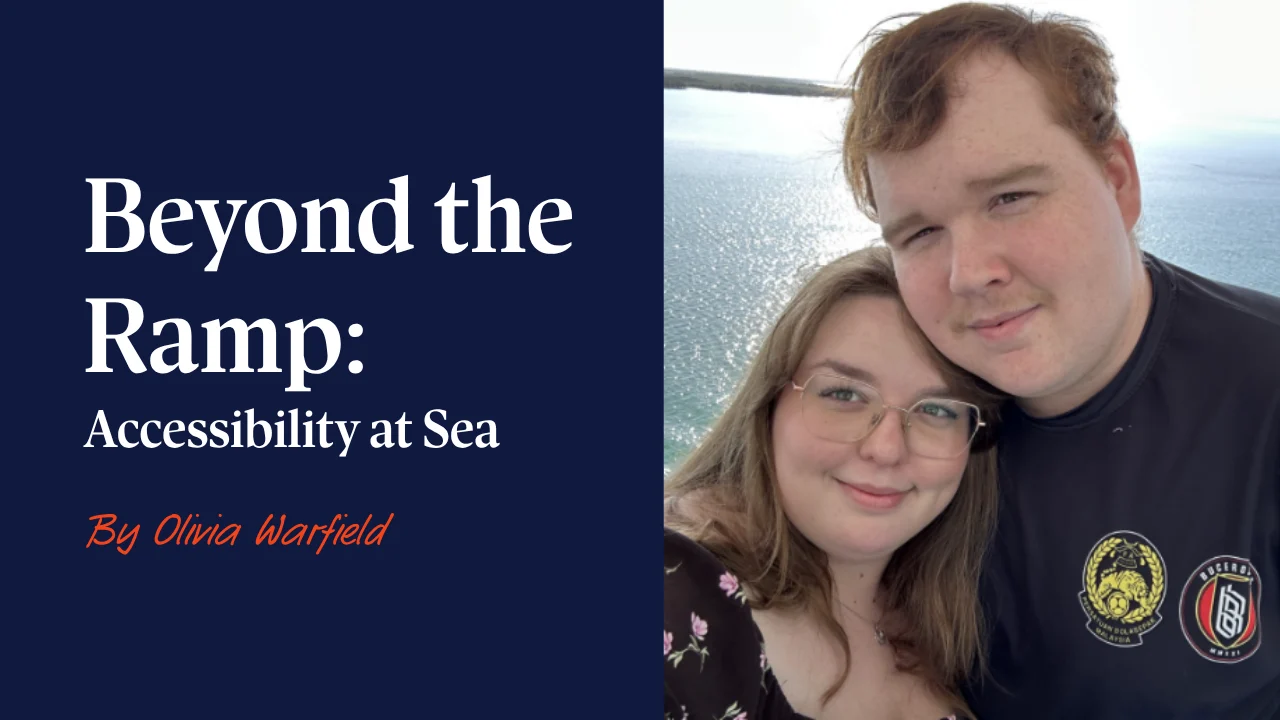
    Olivia and her partner are smiling while out at sea on a Cruise ship.

    When people think about accessibility on a cruise, the first things that come to mind are often the physical features. Is there a ramp? A lift? An accessible cabin?

    While those questions matter, after travelling on cruises as an ambulatory wheelchair user, I’ve learned that they only tell part of the story.

    For context, I have been cruising for as long as I can remember (thanks to my Mum and Dad). However, after being diagnosed with Multiple Sclerosis (MS) in 2022 and beginning to use a wheelchair more regularly, I discovered that a familiar holiday can feel very different when you experience it from a new perspective.

    During my last two cruises, in 2024 and September 2026, I encountered accessibility considerations I had never thought about previously, including some that may not be immediately noticeable to passengers without mobility access needs.

    Despite those challenges, my experiences have been overwhelmingly positive. I’ve explored the ships, participated in activities, visited destinations around Australia and continued to enjoy many of the things I have always loved about cruising.

    But I’ve also learned that something being technically accessible doesn’t necessarily mean it is easily or independently accessible in practice.

    And there was one factor I definitely hadn’t anticipated having such a significant impact.

    The ocean.

    Or, more specifically, the weather.

    Getting Onboard

    Let’s start at the beginning: getting onto the ship.

    On both cruises, passengers using wheelchairs and mobility aids had access to a separate boarding process. Clear signage made it easy to understand where I needed to go, and staff were readily available to provide directions and assistance.

    My companions were also able to go through the separate security and check-in process with me, which made the experience significantly easier.

    I found the accessible check-in process very straightforward. The queues were generally shorter, everything moved smoothly, and there was always someone nearby if I needed assistance.

    Security was slightly different. As I remained in my wheelchair, I needed to undergo a physical pat down. I was offered the choice of a male or female security officer, as well as the option to have the screening completed in a private room.

    On both occasions, the process was quick and respectful, and the security officers clearly communicated about what was happening throughout.

    Getting Around the Ship
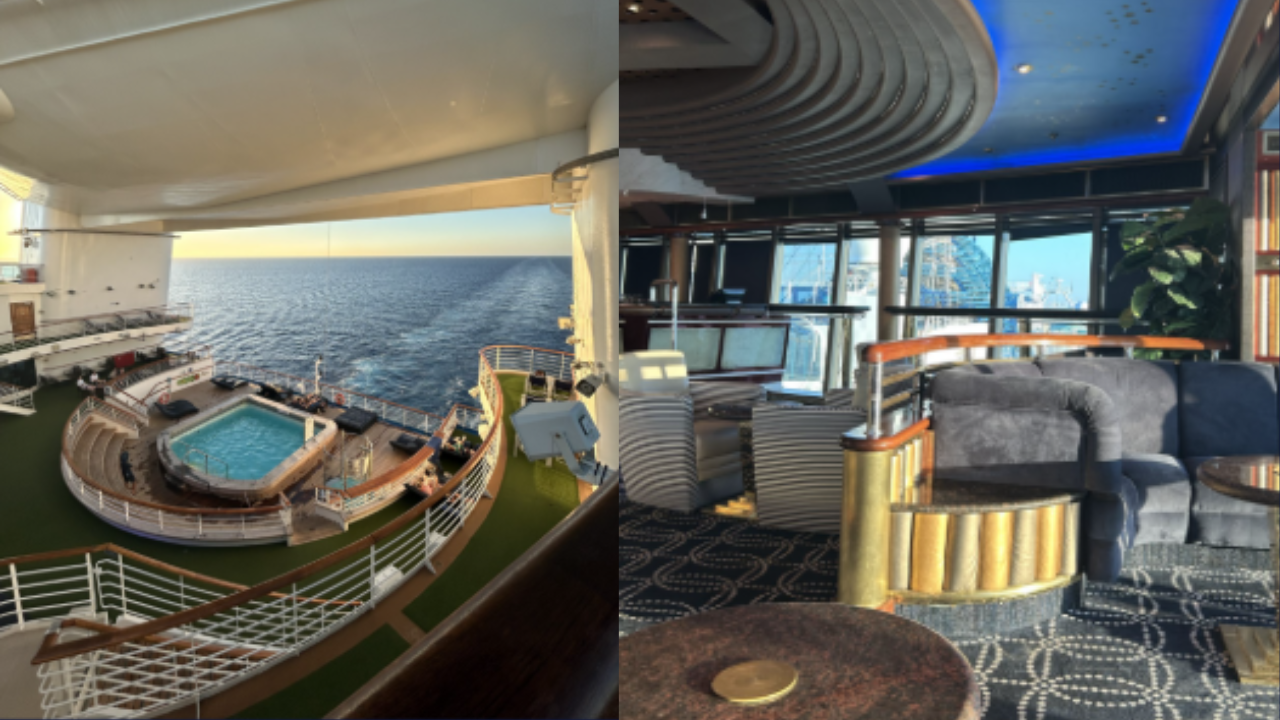
    Split image showing accessibility features on a cruise ship. Left: an outdoor deck with a swimming pool, surrounding seating and railings overlooking the ocean. Right: an indoor lounge area with wide walkways, seating and open spaces designed for easy navigation around the ship.

    For the most part, getting around the ship in my wheelchair was incredibly easy. Ramps, lifts and railings were available throughout the ship, although there were a few steeper ramps where I needed assistance and some heavy doors that were difficult to navigate independently.

    What I didn’t anticipate was how much the weather could change that experience.

    One of my strongest, and possibly funniest, memories from my 2024 cruise involves rough seas and a small ramp outside the casino.

    On one particularly rough day, I attempted to wheel myself up the ramp. I made it about halfway before the ship hit a wave and I rolled straight back to where I started.

    I tried again.

    And again.

    Eventually, I attempted to time my way up the ramp with the movement of the ship, which unsurprisingly didn’t work particularly well either.

    After several attempts, a group of fellow passengers kindly offered to help me up the ramp. I accepted and ended up making some new cruise friends in the process.

    It was funny in hindsight, but it also highlighted something I had never considered before becoming a wheelchair user: on a cruise ship, the floor moves.

    When I returned to the same ship in 2026, my experience was significantly different. We had less than one-metre swells for almost the entire trip, and moving around independently was considerably easier.

    A ramp that I can navigate without assistance in calm conditions can become a completely different challenge when the ship is moving beneath me.

    The lifts presented another consideration. They were reliable, but often crowded, particularly during peak periods such as embarkation. Finding a lift wasn’t difficult, but finding one with enough space for my wheelchair sometimes required waiting for several lifts to pass.

    Staying in a Standard Cabin

    As an ambulatory wheelchair user, I chose to stay in a standard cabin on both cruises, as it met most of my individual access needs.

    However, there were some limitations.

    My manual wheelchair couldn’t fit through the cabin doorway. My chair is relatively large, and cruise cabin doorways can be quite narrow, so this may not be the experience of every wheelchair user.

    Because I am ambulatory, I was able to transfer out of my wheelchair and walk into the cabin.

    There was also a small step into the bathroom, which was the case on every cruise I took. Most of the time this wasn’t a significant issue for me, but when my mobility was reduced and lifting my legs became more difficult, even that small step created an additional barrier.

    Fortunately, railings around the shower and toilet made navigating the bathroom easier.

    The cabin also had a large closet where I could store my wheelchair when I wasn’t using it. With limited floor space in a standard cabin, being able to store my wheelchair safely and out of the way made a significant difference.

    Activities and Excursions

    For the record, I LOVE bingo, and I have attended it on almost every cruise I’ve been on.

    During my last two cruises, bingo was held in the theatre, where designated wheelchair seating was available on two levels.

    The lower-level seating required travelling through a dark, backstage-style hallway and navigating a ramp that was relatively easy to travel down but considerably harder for me to travel back up independently.

    The second option was at the rear of the upper level and involved another steep incline that I couldn’t comfortably navigate without assistance.

    Neither option stopped me from enjoying bingo, but the experience was a reminder that accessibility doesn’t end with providing a designated space. The route someone needs to take to reach that space is equally important.

    I experienced a similar consideration when travelling ashore at Airlie Beach.

    As the ship was unable to dock directly at the port, passengers travelled between the ship and shore using tender boats. An accessible tender service was available for passengers with mobility requirements, but it operated on a more limited timetable than the standard service.

    As I was able to walk on the day, my partner and I chose to use the standard tender service because its schedule was better aligned with our plans.

    Doing so required navigating eight unexpectedly steep stairs.

    Even my partner, who does not have the same mobility requirements as me, found the stairs challenging.

    Being an ambulatory wheelchair user meant I could navigate them with assistance, but the experience highlighted another aspect of accessible travel that isn’t always obvious during the planning process.

    Sometimes the barriers aren’t on board the ship itself. They occur at the transition between the ship and the shore.

    Accessibility Beyond Mobility

    One thing that didn’t personally affect me, but that I really appreciated during my most recent cruise, was how consistently dining staff asked passengers about food allergies and dietary requirements.

    At every restaurant I attended, I was asked whether I had any requirements that needed to be accommodated.

    I didn’t require dietary accommodations, so I can’t comment on that process firsthand. However, I appreciated that staff raised the question proactively rather than relying on passengers to initiate the conversation themselves.

    It is also an important reminder that accessibility extends beyond mobility.

    Not every disability or access requirement is visible, and not every accessibility consideration involves a wheelchair, ramp or lift. Creating an inclusive travel experience means considering a broad range of individual access requirements.

    Would I Cruise Again?

    Absolutely.

    While it is important to talk honestly about the barriers I encountered, I also don’t want those barriers to give the impression that my experiences cruising as a wheelchair user have been negative.

    They haven’t.

    Using my wheelchair during my last two cruises didn’t prevent me from enjoying the experience. I went to bingo and trivia, dressed up for Gatsby night, spent time out on the deck, visited destinations and participated in the things I wanted to do.

    There were steep ramps, heavy doors, crowded lifts, awkward routes and moments where I needed assistance. But those moments weren’t my entire holiday, and they certainly didn’t ruin it.

    Before my first cruise using a wheelchair, I was nervous that my experience would be completely different from the cruises I had enjoyed growing up.

    In some ways, it was different.

    But different didn’t mean worse.

    I made new friends, learned more about my own access needs and discovered that, with the right support and a little flexibility, I could continue enjoying a type of holiday that has been part of my life for as long as I can remember.

    For me, talking honestly about accessible travel means acknowledging both sides of that experience.

    There can be barriers worth discussing and opportunities to make travel more inclusive, while the overall experience can still be incredibly positive.

    And I would happily cruise again.

    Hopefully sooner rather than later!

    Author

    This piece was written by Olivia Warfield, Creative Media Specialist based in Queensland and SCIA Volunteer Content Creator.
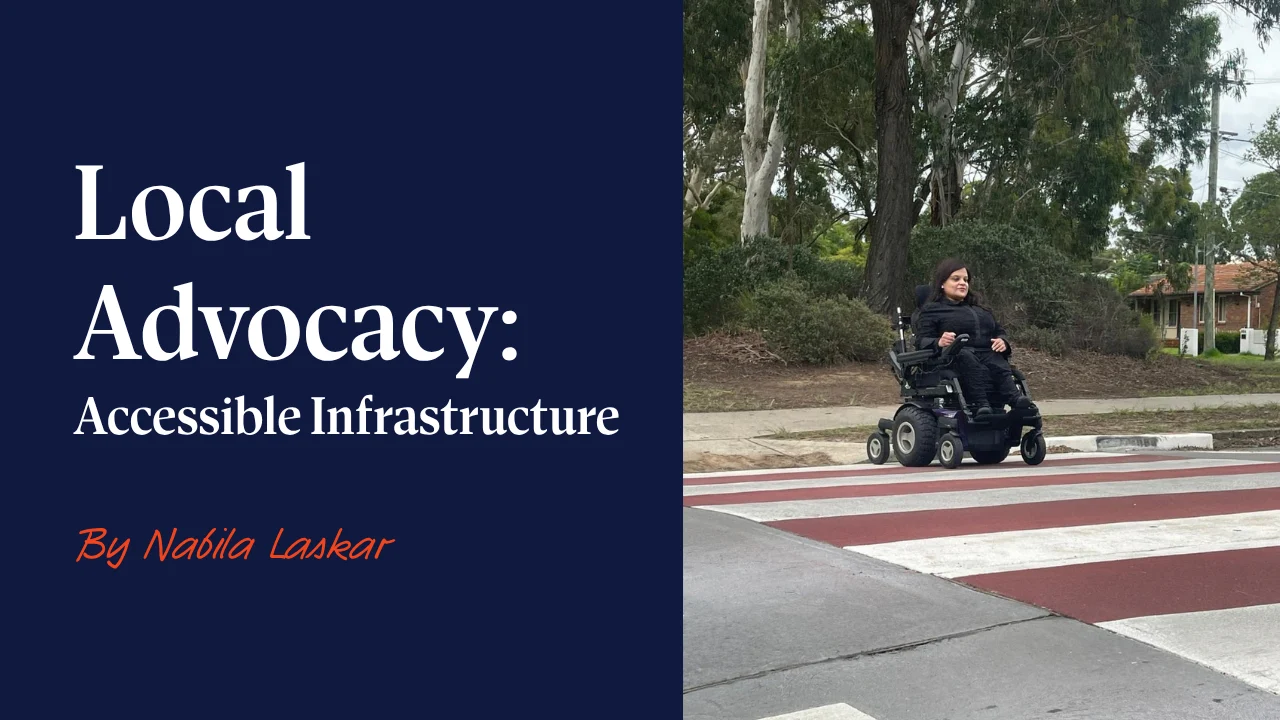

    Olivia and her partner are smiling while out at sea on a Cruise ship.

    When people think about accessibility on a cruise, the first things that come to mind are often the physical features. Is there a ramp? A lift? An accessible cabin?

    While those questions matter, after travelling on cruises as an ambulatory wheelchair user, I’ve learned that they only tell part of the story.

    For context, I have been cruising for as long as I can remember (thanks to my Mum and Dad). However, after being diagnosed with Multiple Sclerosis (MS) in 2022 and beginning to use a wheelchair more regularly, I discovered that a familiar holiday can feel very different when you experience it from a new perspective.

    During my last two cruises, in 2024 and September 2026, I encountered accessibility considerations I had never thought about previously, including some that may not be immediately noticeable to passengers without mobility access needs.

    Despite those challenges, my experiences have been overwhelmingly positive. I’ve explored the ships, participated in activities, visited destinations around Australia and continued to enjoy many of the things I have always loved about cruising.

    But I’ve also learned that something being technically accessible doesn’t necessarily mean it is easily or independently accessible in practice.

    And there was one factor I definitely hadn’t anticipated having such a significant impact.

    The ocean.

    Or, more specifically, the weather.

    Getting Onboard

    Let’s start at the beginning: getting onto the ship.

    On both cruises, passengers using wheelchairs and mobility aids had access to a separate boarding process. Clear signage made it easy to understand where I needed to go, and staff were readily available to provide directions and assistance.

    My companions were also able to go through the separate security and check-in process with me, which made the experience significantly easier.

    I found the accessible check-in process very straightforward. The queues were generally shorter, everything moved smoothly, and there was always someone nearby if I needed assistance.

    Security was slightly different. As I remained in my wheelchair, I needed to undergo a physical pat down. I was offered the choice of a male or female security officer, as well as the option to have the screening completed in a private room.

    On both occasions, the process was quick and respectful, and the security officers clearly communicated about what was happening throughout.

    Getting Around the Ship

    Split image showing accessibility features on a cruise ship. Left: an outdoor deck with a swimming pool, surrounding seating and railings overlooking the ocean. Right: an indoor lounge area with wide walkways, seating and open spaces designed for easy navigation around the ship.

    For the most part, getting around the ship in my wheelchair was incredibly easy. Ramps, lifts and railings were available throughout the ship, although there were a few steeper ramps where I needed assistance and some heavy doors that were difficult to navigate independently.

    What I didn’t anticipate was how much the weather could change that experience.

    One of my strongest, and possibly funniest, memories from my 2024 cruise involves rough seas and a small ramp outside the casino.

    On one particularly rough day, I attempted to wheel myself up the ramp. I made it about halfway before the ship hit a wave and I rolled straight back to where I started.

    I tried again.

    And again.

    Eventually, I attempted to time my way up the ramp with the movement of the ship, which unsurprisingly didn’t work particularly well either.

    After several attempts, a group of fellow passengers kindly offered to help me up the ramp. I accepted and ended up making some new cruise friends in the process.

    It was funny in hindsight, but it also highlighted something I had never considered before becoming a wheelchair user: on a cruise ship, the floor moves.

    When I returned to the same ship in 2026, my experience was significantly different. We had less than one-metre swells for almost the entire trip, and moving around independently was considerably easier.

    A ramp that I can navigate without assistance in calm conditions can become a completely different challenge when the ship is moving beneath me.

    The lifts presented another consideration. They were reliable, but often crowded, particularly during peak periods such as embarkation. Finding a lift wasn’t difficult, but finding one with enough space for my wheelchair sometimes required waiting for several lifts to pass.

    Staying in a Standard Cabin

    As an ambulatory wheelchair user, I chose to stay in a standard cabin on both cruises, as it met most of my individual access needs.

    However, there were some limitations.

    My manual wheelchair couldn’t fit through the cabin doorway. My chair is relatively large, and cruise cabin doorways can be quite narrow, so this may not be the experience of every wheelchair user.

    Because I am ambulatory, I was able to transfer out of my wheelchair and walk into the cabin.

    There was also a small step into the bathroom, which was the case on every cruise I took. Most of the time this wasn’t a significant issue for me, but when my mobility was reduced and lifting my legs became more difficult, even that small step created an additional barrier.

    Fortunately, railings around the shower and toilet made navigating the bathroom easier.

    The cabin also had a large closet where I could store my wheelchair when I wasn’t using it. With limited floor space in a standard cabin, being able to store my wheelchair safely and out of the way made a significant difference.

    Activities and Excursions

    For the record, I LOVE bingo, and I have attended it on almost every cruise I’ve been on.

    During my last two cruises, bingo was held in the theatre, where designated wheelchair seating was available on two levels.

    The lower-level seating required travelling through a dark, backstage-style hallway and navigating a ramp that was relatively easy to travel down but considerably harder for me to travel back up independently.

    The second option was at the rear of the upper level and involved another steep incline that I couldn’t comfortably navigate without assistance.

    Neither option stopped me from enjoying bingo, but the experience was a reminder that accessibility doesn’t end with providing a designated space. The route someone needs to take to reach that space is equally important.

    I experienced a similar consideration when travelling ashore at Airlie Beach.

    As the ship was unable to dock directly at the port, passengers travelled between the ship and shore using tender boats. An accessible tender service was available for passengers with mobility requirements, but it operated on a more limited timetable than the standard service.

    As I was able to walk on the day, my partner and I chose to use the standard tender service because its schedule was better aligned with our plans.

    Doing so required navigating eight unexpectedly steep stairs.

    Even my partner, who does not have the same mobility requirements as me, found the stairs challenging.

    Being an ambulatory wheelchair user meant I could navigate them with assistance, but the experience highlighted another aspect of accessible travel that isn’t always obvious during the planning process.

    Sometimes the barriers aren’t on board the ship itself. They occur at the transition between the ship and the shore.

    Accessibility Beyond Mobility

    One thing that didn’t personally affect me, but that I really appreciated during my most recent cruise, was how consistently dining staff asked passengers about food allergies and dietary requirements.

    At every restaurant I attended, I was asked whether I had any requirements that needed to be accommodated.

    I didn’t require dietary accommodations, so I can’t comment on that process firsthand. However, I appreciated that staff raised the question proactively rather than relying on passengers to initiate the conversation themselves.

    It is also an important reminder that accessibility extends beyond mobility.

    Not every disability or access requirement is visible, and not every accessibility consideration involves a wheelchair, ramp or lift. Creating an inclusive travel experience means considering a broad range of individual access requirements.

    Would I Cruise Again?

    Absolutely.

    While it is important to talk honestly about the barriers I encountered, I also don’t want those barriers to give the impression that my experiences cruising as a wheelchair user have been negative.

    They haven’t.

    Using my wheelchair during my last two cruises didn’t prevent me from enjoying the experience. I went to bingo and trivia, dressed up for Gatsby night, spent time out on the deck, visited destinations and participated in the things I wanted to do.

    There were steep ramps, heavy doors, crowded lifts, awkward routes and moments where I needed assistance. But those moments weren’t my entire holiday, and they certainly didn’t ruin it.

    Before my first cruise using a wheelchair, I was nervous that my experience would be completely different from the cruises I had enjoyed growing up.

    In some ways, it was different.

    But different didn’t mean worse.

    I made new friends, learned more about my own access needs and discovered that, with the right support and a little flexibility, I could continue enjoying a type of holiday that has been part of my life for as long as I can remember.

    For me, talking honestly about accessible travel means acknowledging both sides of that experience.

    There can be barriers worth discussing and opportunities to make travel more inclusive, while the overall experience can still be incredibly positive.

    And I would happily cruise again.

    Hopefully sooner rather than later!

    Author

    This piece was written by Olivia Warfield, Creative Media Specialist based in Queensland and SCIA Volunteer Content Creator.
    Search SCIA: