Opens in a new tab
SearchJoin Our CommunityCommunity
  • Donate Now
  • Donate

    Function Improvement

    Discover more on Function Improvement

    Categories
    + Show More
    List View

    Locomotor Training, more than just a shiny tool for SCI Recovery

    Often, exercise comes in the form of structured and intensive exercise therapies. One such modality is Locomotor Training (LT) and...
    Read More
    Project Spark: Exploring Neurostimulation Treatments, the Intersection of Technology and Healing

    In the ever-evolving landscape of medical progress, the sparks of innovation consistently illuminate the path toward discovering novel solutions that...
    Read More

    Why Research Matters: Collection of Spinal Cord Injury Research

    "Why Research Matters" is a content-rich, informative annual publication by Spinal Research Institute. Every magazine issue features some of the...
    Read More

    100 Real Life Stories about Having a Spinal Cord Injury

    Facing Disability has collated over 100 interviews with people about having a spinal cord injury
    Read More
    Neuroplasticity and The Human Body

    For this episode of Have the Nerve, Susan talks to Dr Camila Quel de Oliveira, and Hannah Maslen about the...
    Read More
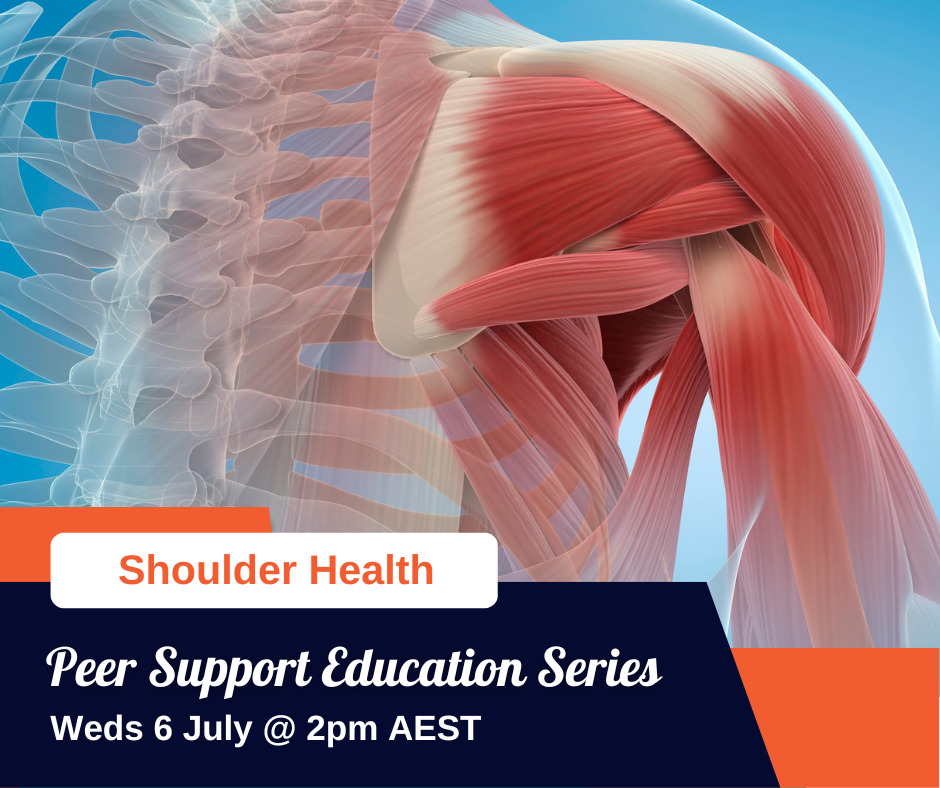
    Peer Support Education Series: Shoulder Prevention

    Our ACT Peer and Family Support education series will focus on shoulder health and preservation, so that you can look...
    Read More
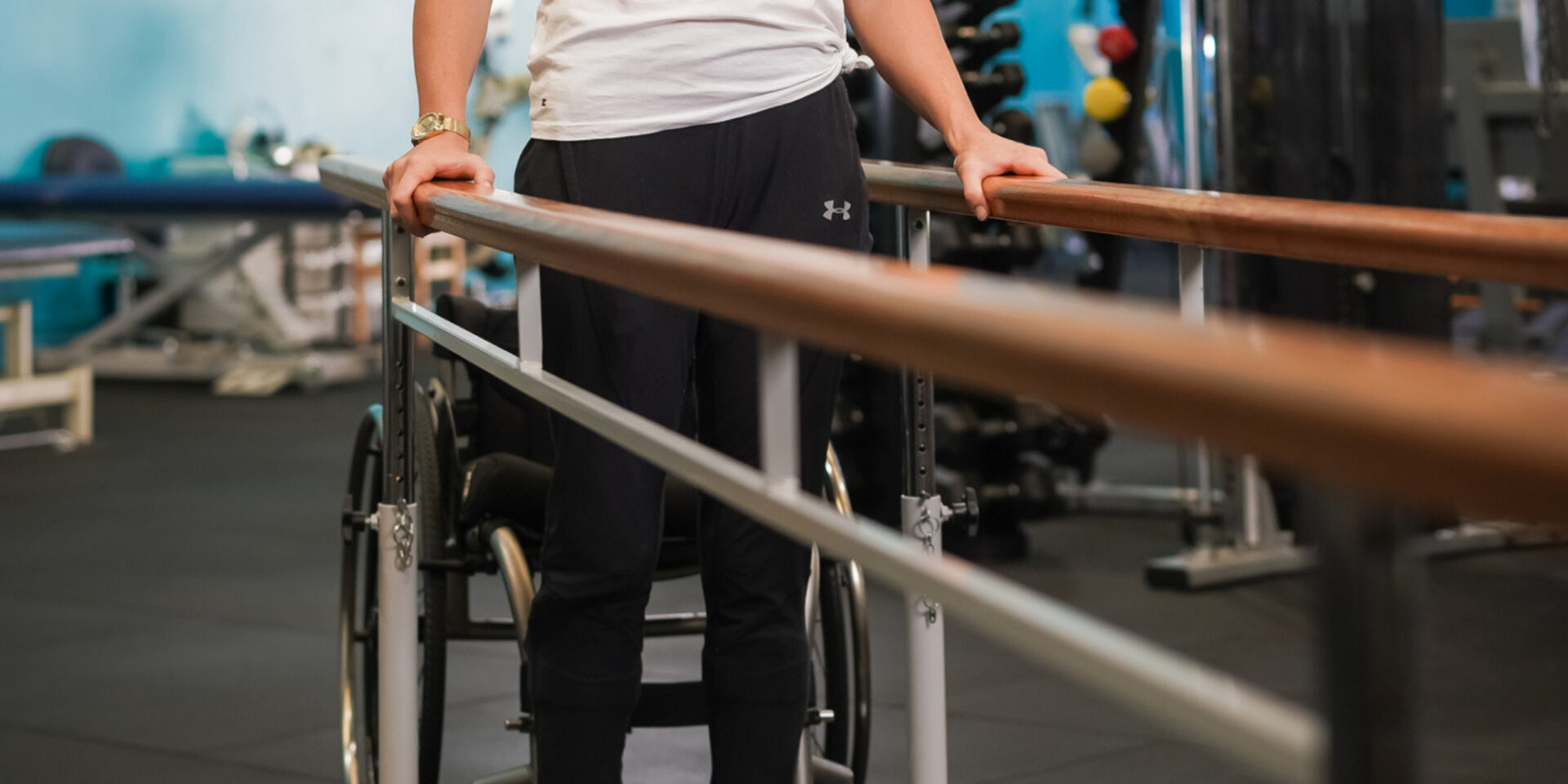
    Indications for a Home Standing Program for Individuals with Spinal Cord Injury

    Additional analyses were conducted on a recently published survey of persons with spinal cord injury (SCI) who used standing mobility...
    Read More

    Does regular standing improve bowel function in people with spinal cord injury?

    Twenty community-dwelling people with motor complete spinal cord injury above T8 participated in a 16-week trial.
    Read More
    Chronic Complications of Spinal Cord Injury

    Spinal cord injury (SCI) is a serious medical condition that causes functional, psychological and socioeconomic disorder.
    Read More

    Navigating life with a neurological injury, such as a spinal cord injury (SCI), presents a multitude of challenges. One of which is meeting the intensities required for physical and neurological change to occur.

    We, in the health professional world, know that to make any form of physiological or neurological change, there are key areas that need to be ticked off to ensure adaptation occurs. Looking at the basic principles of plasticity (intensity, meaningfulness, repetition, specificity, challenging and timing) and how we apply these is clear for progress to occur (i.e. constraint induced movement therapy, skill acquisition, strength adaptations).

    In very basic terms, we need to work hard, and often, towards things that matter to us to experience progress or change. This, when lined up against how many people with a neuro condition are reaching or exceeding the physical activity guidelines (being very sub optimal), demonstrates a clear divide for what we know is healthy, and what is happening at the coalface. 

    Recovery aside, reaching the appropriate dosages of exercise is crucial for maintaining a healthy life and addressing the myriad of secondary health concerns that persist well beyond the move from the care of a hospital wing to the community setting. Many neurological injuries alter many of the subconscious / autonomic bodily systems as well as the body’s response to exercise. The complexities of such injuries are compounded further by the daunting task of sustaining health-promoting habits. It can be difficult to decipher what is available and appropriate for people to meet or exceed what is recommended to address these secondary health concerns and target aspects of their health that are not traditionally “rehabilitation focused” (i.e. how often I need to catheterise). 

    Often, exercise comes in the form of structured and intensive exercise therapies. One such modality is Locomotor Training (LT) and is one modality of exercise that aligns and exceeds the recommendations for physical activity by achieving the prescribed moderate to high-intensity exercise levels. Locomotor training also has an emphasis on ongoing change, and should this change not occur, transition to more appropriate interventions is recommended.

    The structured nature of locomotor training sessions, involving repetitive, task-specific movements at vigorous intensities, allows individuals with SCI to engage in a form of aerobic activity at levels meeting and surpassing the WHO’s guidelines as well as meeting the neurplastic principles mentioned above.

    Through body-weight-supported training participants can attain and sustain intensities necessary to promote cardiovascular health, metabolic improvements, and recovery focused interventions that extend beyond physical capacity measures. This unique convergence of locomotor training and the WHO exercise guidelines not only addresses the locomotor principles for optimised neurological recovery but also serves as a powerful means to fulfil the recommended exercise intensity, fostering enhanced metabolic function and improved overall well-being for individuals with a spinal cord injury. 

    Locomotor training promotes a platform to obtain physical health outcomes in a very empowering way but also promotes “silent” improvements of the neurological and autonomic systems. Some of these are an improved trunk control, bone mineral density, quality of life, improved bowel and bladder sensation and function, reduction in muscle spasms and pain symptoms.

    For those with an incomplete or ambulatory neurological conditions, LT promotes increased muscle length and joint mobility, improved walking speed, improved walking independence, endurance, balance and gross motor skill as well as a decreased asymmetry of gait. Undoubtably there are compounding positive effects on well-being, quality of life and perceived life satisfaction. For someone that experiences exercising from a wheelchair on a regular basis, working hard at eye level cannot be understated for its impact and meaningfulness. 

    Locomotor training demonstrates one way to enhance recovery whilst addressing several of the secondary health concerns associated with disability by adequately exceeding the recommendations of intensity of exercise for those with a neurological condition. LT training simultaneously addresses the intensities required for neurological adaptation and neuroplasticity, is intense and specific in its application and promotes positive health outcomes that extend beyond the physical. Its structured approach offers a pathway towards improving glucose metabolism, lipid profiles, and overall body composition, as well as improved neuromuscular function. The focus of LT is not to learn to walk again, but to excite the nervous system enough to provide a platform for adaptation to occur.

    Find out more about Locomotor at NeuroMoves here.

    Written by Jessica Hansson and Alex Batho, Exercise Physiologists at NeuroMoves

    References 

    • Anwer, S., Equebal, A., Palekar, T. J., Nezamuddin, M., Neyaz, O., & Alghadir, A. (2014). Effect of locomotor training on motor recovery and walking ability in patients with incomplete spinal cord injury: a case series. Journal of Physical Therapy Science, 26(6), 951-953. 
    • Jones, M. L., Evans, N., Tefertiller, C., Backus, D., Sweatman, M., Tansey, K., & Morrison, S. (2014). Activity-based therapy for recovery of walking in individuals with chronic spinal cord injury: results from a randomized clinical trial. Archives of physical medicine and rehabilitation, 95(12), 2239-2246. 
    • de Paleville, D. T., McKay, W., Aslan, S., Folz, R., Sayenko, D., & Ovechkin, A. (2013). Locomotor step training with body weight support improves respiratory motor function in individuals with chronic spinal cord injury. Respiratory physiology & neurobiology, 189(3), 491-497. 
    • McKay, W. B., Ovechkin, A. V., Vitaz, T. W., Terson de Paleville, D. G. L., & Harkema, S. J. (2011). Neurophysiological characterization of motor recovery in acute spinal cord injury. Spinal Cord, 49(3), 421-429. 
    • McKay, W. B., Ovechkin, A. V., Vitaz, T. W., Terson de Paleville, D. G. L., & Harkema, S. J. (2011). Neurophysiological characterization of motor recovery in acute spinal cord injury. Spinal Cord, 49(3), 421-429. 
    • Harkema, S., Behrman, A., & Barbeau, H. (2010). Locomotor training: principles and practice. Oxford University Press. 
    • Gorassini, M. A., Norton, J. A., Nevett-Duchcherer, J., Roy, F. D., & Yang, J. F. (2009). Changes in locomotor muscle activity after treadmill training in subjects with incomplete spinal cord injury. Journal of neurophysiology, 101(2), 969-979. 
    • Alexander, M. S., Anderson, K. D., Biering-Sorensen, F., Blight, A. R., Brannon, R., Bryce, T. N., … & Whiteneck, G. (2009). Outcome measures in spinal cord injury: recent assessments and recommendations for future directions. Spinal cord, 47(8), 582-591. 
    • Alexander, M. S., Anderson, K. D., Biering-Sorensen, F., Blight, A. R., Brannon, R., Bryce, T. N., … & Whiteneck, G. (2009). Outcome measures in spinal cord injury: recent assessments and recommendations for future directions. Spinal cord, 47(8), 582-591. 
    • Dietz, V., Grillner, S., Trepp, A., Hubli, M., & Bolliger, M. (2009). Changes in spinal reflex and locomotor activity after a complete spinal cord injury: a common mechanism?. Brain, 132(8), 2196-2205. 
    • Plummer-D’Amato, P., Altmann, L. J., Saracino, D., Fox, E., Behrman, A. L., & Marsiske, M. (2008). Interactions between cognitive tasks and gait after stroke: a dual task study. Gait & posture, 27(4), 683-688. 
    • Harkema, S.J., 2008. Plasticity of interneuronal networks of the functionally isolated human spinal cord. Brain research reviews, 57(1), pp.255-264. 
    • Harkema, S.J., Schmidt-Read, M., Lorenz, D.J., Edgerton, V.R. and Behrman, A.L., 2012. Balance and ambulation improvements in individuals with chronic incomplete spinal cord injury using locomotor training–based rehabilitation. Archives of physical medicine and rehabilitation, 93(9), pp.1508-1517. 
    • Alekna, V., Tamulaitiene, M., Sinevicius, T. & Juocevicius, A. 2008. Effect of weight-bearing activities on bone mineral density in spinal cord injured patients during the period of the first two years. Spinal Cord., 46(11), 727-732. 
    • Agrati, P.E., Cozzo, D.A., Fernandez, S.A., Freixes, O., Gatti, .MA., Olmos, L.E., Rubel, I.F., & Vila, C.J. 2008. Comparison of Gait Performance on Different Environmental Settings for Patients with Chronic Spinal Cord Injury. Spinal Cord, 46(5), pp. 331-334. 
    •  Forrest et al 2008 
    • Jayaraman et al 2008 
    • Dobkin 2006 
    • Barbeau 2006 
    • Hannold et al 2006 
    • Berhman et al 2005 
    • Hicks et al 2005 
    • Phillips 2004 
    • Anderson 2004  
    • Wriz 2001 
    • Berhman and Harkema 2000, 
    • Ladoceur 2000 
    • Barbeau et al 1998a and 1998b 
    •  Wernig et al 1995 and1992. 
    • Behrman, A, Ardolino, E, VanHeil, L, et al. Assessment of functional improvement without compensation Reduces variability or outcome measures after human spinal cord injury. Archives of Physical Medicine Rehabilitation, 93 (9), 1518-1529. Copyright 2012 Elsevier. 
    • Dietz,1994, 1996, 2002 
    •  Barbeau,1998 
    • Harkema, 2000, 2004 
    • Grillner,1981 
    • Jankowska, 1992 
    • Mc Crea, 2001 
    • Grillner,1981; Jankowska, 1992; Mc Crea, 2001) 

    Search SCIA: