SearchJoin Our CommunityCommunity
  • Donate Now
  • Donate

    Your central hub for information, support tools, and practical advice.

    We have a wealth of knowledge to share with you about living with a spinal cord injury (SCI), and have pulled this together in this section to help you access the information you need, when you need it.

    Discover our resources

    Categories
    + Show More
    List View

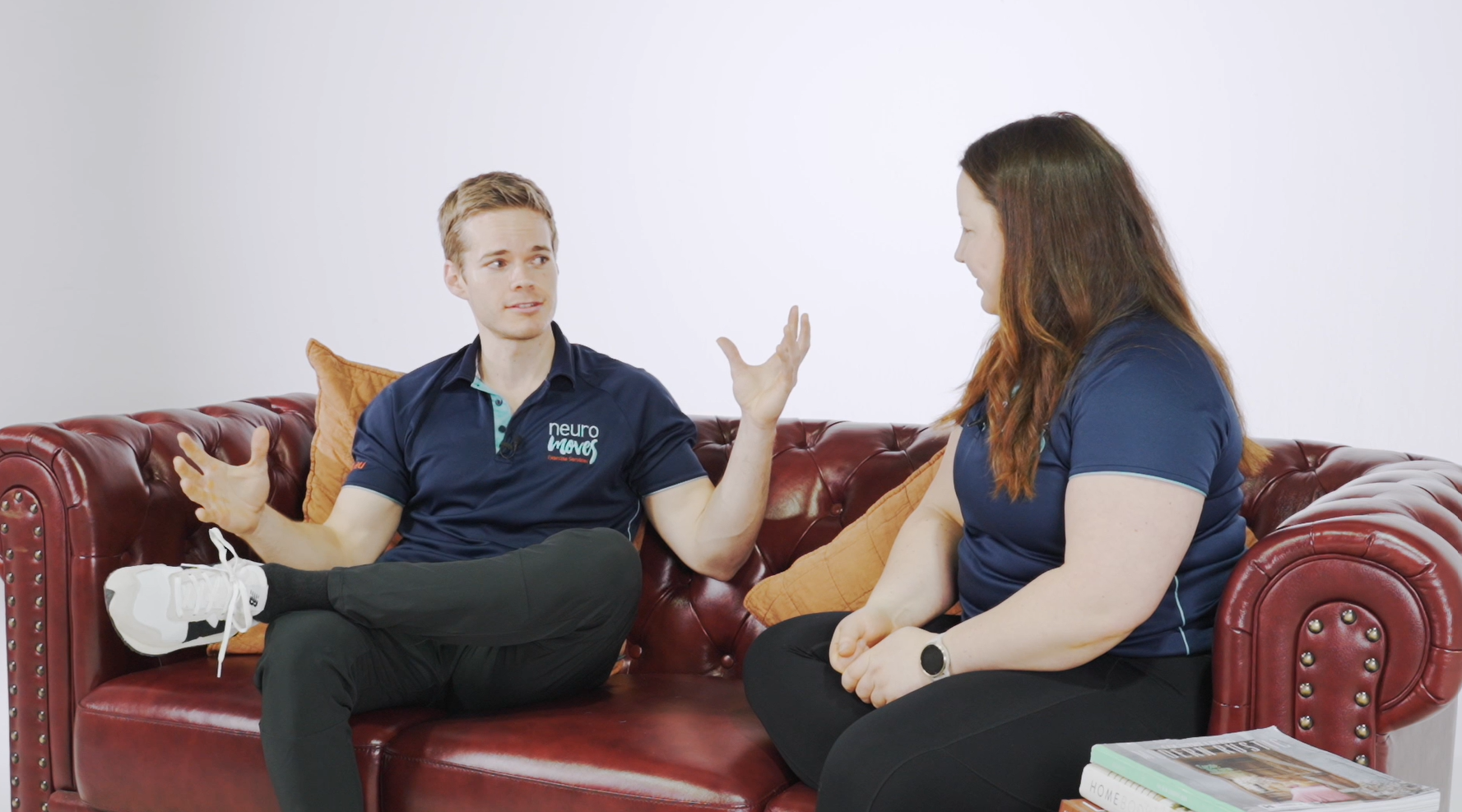
    NeuroMoves On the Couch: Mobility and Independence for People with Cerebral Palsy

    In this week's Episode of NeuroMoves On the Couch, Exercise Physiologist Jess and Physiotherapist Noah discuss the importance of recognising...
    Read More

    NeuroMoves On The Couch – Navigating Exercise After Stroke

    NeuroMoves on The Couch is our newest series as we tackle everything to do with disability, exercise and rehabilitation! In...
    Read More

    Wheelchair Skills – Gutter Charges

    Feeling confident about your wheel stand skills? Let’s start doing gutter charges! Gutter charges in a manual wheelchair take time and...
    Read More

    Something To Think About – What Does Sport Mean To Me?

    Have The Nerve Not-So-Short this episode! You will hear the stories of three people who explain what sport means to...
    Read More

    Wheelchair Skills – Wheel Stands Part Two

    In part one of doing wheel stands, Jason talked about why it was such an important skill. In part two...
    Read More

    Living with Cerebral Palsy: Prioritising Exercise & Movement

    Around 34,000 Australians are living with Cerebral Palsy, a disability that affects a person’s posture, balance and ability to move....
    Read More

    Why does pain exist?

    Pain is our bodies natural response to sensory input that causes us to withdraw from potentially harmful situations, however this does not necessarily mean damage to our bodies is occurring or has occurred.

    We generally see three different types of pain which have very different mechanisms and treatment methods:

    1. Acute pain – Sometimes called nociceptive pain, which doesn’t exactly roll off the tongue. Nociceptors are our sensory pain receptors which respond with messages of pain if a certain threshold has been reached.

      They can be triggered by a thermal response (hot or cold), a mechanical response (e.g. crushing or tearing) or a chemical response (e.g. alcohol rub in a cut). This is the sort of pain that we experience with acute injuries we often see, triggered by a mechanical response, such as muscle and tendon strains, ligament sprains and broken bones. The type of pain experienced depends on where the pain receptors have been activated, which can range from a dull, aching, poorly localised sensation (usually from structures deeper within the body) to a sharp, stabbing, well-defined sensation (usually more superficial body structures).

      Treatment for acute pain depends on what, if any, body structures have been damaged. If we treat the structures sending pain signals, the pain eventually resolves. Usually, in our line of work, we are talking about soft tissue and follow the RICER principles, which refers to Rest, Ice, Compression, Elevation and then Referral. Referral should be synonymous with Rehabilitation, which is essentially what the referral is for. We can also use common pain-relieving medications, which act in many different ways such as increasing our pain threshold (Panadol), preventing / reducing inflammation (Nurofen), or inhibiting pain messages in the nervous system (Morphine / Codeine).

    2. Chronic pain – This type of pain gets more complicated. It is acute pain that has lasted longer than the expected healing time (generally more than 6 months). This causes changes in the way the brain interprets the pain receptors signals with the pain experience being very similar.

      Think of it like a computer error where there are 3 main things that happen:

      1. Amplification – Think of trying to press the P button on a computer and multiple P’s show up on the screen. The brain has increased a normal pain response into a larger, exaggerated pain response.
      2. Misinterpretation – Think of pressing the M button on a computer but a P shows up on the screen. A stimulus that should not be painful (i.e. M) is now being interpreted as pain.
      3. Lowered pain threshold – Think of the P button being constantly half held down. The pain threshold is more easily reached than it should be.

        Treatment for this type of pain is much more complex. It requires a degree of understanding and acceptance of the psychological mechanisms of the pain described above, followed by carefully retraining the way the brain interprets pain signals. This requires an individualised approach, as everyone’s pain response varies too much to have a single recipe. Pain relieving medications are not effective at treating this type of pain.

    3. Neuropathic pain – This is another, more complicated type of pain, and is especially relevant to people living with neurological disorders. When the brain has limited access to sensory input due to damage to the nervous system, individuals may experience neuropathic pain.

      Your brain interprets a reduced or absent ability to feel through a certain body part or region as potentially dangerous to that area, so it sends out pain signals to try to remove that area from its situation. This pain is experienced as tingling, burning, electric shock or pins and needles sensations.

      Treatment for this type of pain is difficult, as it is not possible to remove the cause of the pain. It generally revolves around the use of specific pain-relieving medications that work by reducing activity of chemicals that relay messages within your nervous system, called neurotransmitters. These medications can have some significant side effects, and cause dependency, so require neurologist input to achieve the best results.

    Written by Colbey Van Leeuwen, NeuroMoves Physiotherapist

    Here are some further resources for you to check out!

    Search SCIA: